

Whether you plan to travel through the colder months or store your RV until spring, proper maintenance is essential. Taking a proactive approach now can prevent costly damage, improve performance, and ensure your rig is ready for whatever the season brings. A few simple yet important steps can go a long way toward protecting your investment and keeping your adventures on track.
The Roof
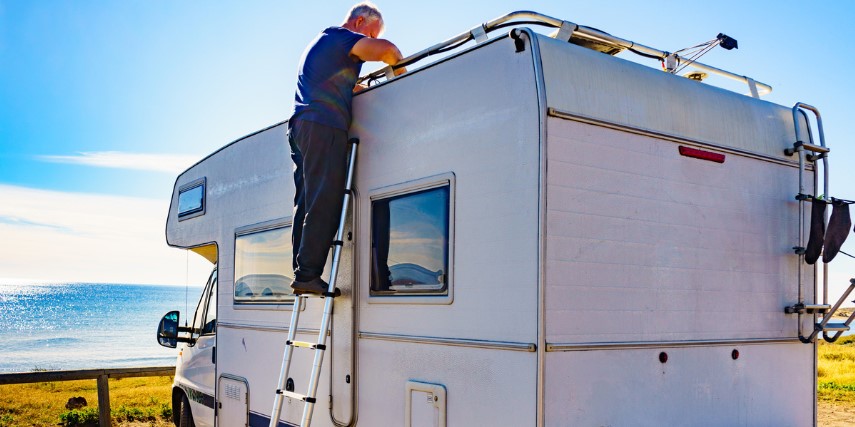
You can take the top-down approach and start with your roof. Get hands-on and clean your roof using a soft-bristle brush. Avoid harsh chemicals, as this can damage your roofing material. Instead, choose a non-toxic cleaner meant for your roof type, such as Thetford rubber roof cleaner for EPDM roofs. You can also opt for water and dish soap.
While cleaning is an important part of RV Maintenance, it also affords you the chance to get up close and find potential problems, like punctures, tears or bad seals. Look around your vents and skylights and ensure the caulking is in great shape.
The Plumbing
Experienced RV owners know the importance of properly maintaining their plumbing systems—especially those who have learned the hard way. Failing to completely drain fluids before freezing temperatures arrive can lead to ice forming in the lines, causing expansion and cracks in the pipes. The resulting repairs can be costly.
To winterize your plumbing, remove all fluids and water filters, then flush your tanks. Drain the water heater and consider running antifreeze through the system to flush out unseen standing water. You can also pour a cup of antifreeze into your sink drains and toilet for good measure.
Reseal Your Exteriors
Windows, doors and vents are where most RV owners experience issues with moisture getting into the RV. Carefully inspect these areas and reseal where needed. Most modern sealants will weatherproof your seams for seven to 10 years but be sure to conduct an inspection at the beginning and end of every RV season.
Pest Control
Just as you’re hunkering down in the warmest spots in your house, pests are looking to do the same in your RV. Step one is to remove anything that might seem inviting to critters, which requires a thorough cleaning of the interiors. Don’t leave any toilet paper or clothes in your RV, as these are great nesting materials. It’s also a good idea to remove canned goods; they can rupture in the cold and provide a food source for rodents. Vacuum thoroughly to eliminate all debris.
Step two is to seal all entry points, using copper wool and expanding foam for larger entry areas. Remember, mice don’t need much room to squeeze through to gain entry.
There are also a variety of natural deterrents that work, such as peppermint oil, mothballs and lighting.
Batteries
You don’t want to pop into your RV this spring only to find the battery has succumbed to winter cold. Make sure it has a full charge, because a discharged battery is likely to freeze and sulfate. Take the time to remove your battery and store it in a warmer environment.
The best option is to remove the battery from your RV and store it in a warm environment. Store it in a cool and dry place above freezing but below 80 degrees Fahrenheit.
At Gray Diesel & Equipment Services, we assist numerous clients with RV maintenance for the winter months. Contact us to schedule an appointment.