

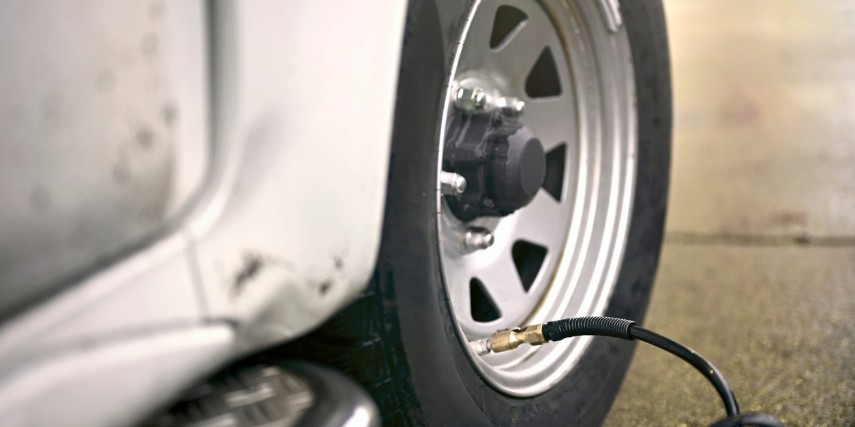
During a road trip, your RV is your home, but unlike your full-time home, your rig’s foundation is four to six tires that must be properly maintained. At best, a flat tire midway through your journey will be a major inconvenience, but a full-on blowout while traveling down an interstate or winding road can lead to loss of control and more serious outcomes. Before your next journey, follow these RV maintenance tips that can help protect you and your family.
Where to Look
RV tires might seem fairly basic compared to more complex systems involved in an RV (engine and drivetrain or the electrical system), but when you’re inspecting your tires, there are several areas to consider, beginning with the most visible, which is the sidewalls. This is where you’ll find the information about maximum inflation pressure. Check your pressure and make sure they’re neither overinflated nor underinflated.
The sidewall is also where you’ll find the DOT code, which includes the tire’s date of manufacture. You’ll see a series of numbers ending in four digits, which show when the tire was made. For example, a code ending in 1215 indicates the tire was manufactured in the twelfth week of 2015. Most tire manufacturers recommend replacing tires after 10 years, regardless of tread depth, because the rubber compounds and internal materials deteriorate over time, increasing the risk of failure.
At seven years of age, most RV owners will begin planning for the expense of changing their tires, especially if they’ve gotten heavy use or have traversed challenging environments. But remember, wear isn’t always the reason you replace tires. Often it is their age.
Signs of Wear
Your tires don’t have to be old to show signs of breaking down. Check the sidewalls for cracks, also known as weather checking. Do you see bulges, bubbles or exposed cords? Is the tread wearing unevenly or are there flat spots caused by long periods of storage? Any of these, along with frequently having to inflate your tires, are signs they need to be replaced.
Mid-Trip Inspections
A crucial part of RV maintenance doesn’t happen prior to a trip, it’s while you’re on it. If you’ve topped off your water tanks, stocked the pantry, and the family has fully loaded their bags for a long trip, the RV is under a heavier load. This can generate more heat on your tires. Performing a walkaround at filling stations or rest stops and checking for cracks, bulges or embedded debris you might have picked up on the road (nails, screws, etc.) is a necessary precaution.
Talk to Your Mechanic
An RV maintenance checklist should include a trip to your local mechanic that specializes in RVs. While they are focused on a variety of important components, such as fluids, battery health, transmission and suspension, they’ll also fully inspect your tires.
At Gray Diesel and Equipment Services, our team of professionals knows exactly what to look for as they go over your RV, including the condition of your tires. Contact us and schedule an appointment before your next trip so you can enjoy the peace of mind that comes with knowing your RV is ready for the road..