

Recreational vehicles are constructed from a variety of materials; however, fiberglass is often the most challenging to maintain. While RV maintenance encompasses a wide range of tasks, fiberglass inspection should be prioritized to protect this significant investment.
Unlike other components, where failures typically stem from one or two identifiable causes, fiberglass damage can result from multiple factors. Prolonged exposure to ultraviolet (UV) light, commonly known as thermal checking, is a primary contributor. Additionally, temperature fluctuations can accelerate wear, while constant road vibration introduces structural stress over time. Environmental factors also play a role; navigating backroads or parking in wooded areas often exposes RV surfaces to branches and debris, increasing the likelihood of physical damage.
RV owners who are not big fans of washing and waxing will also run into more fiberglass problems than those who relish such chores. Oxidation occurs more frequently on untreated fiberglass, so put this item on your RV maintenance to-do list.
Fiberglass cracks are not pretty, but the problem runs far deeper than cosmetic. You could be at risk of moisture-induced mold and structural damage like delamination, where the layers of your RV begin to separate.
Early Detection
Nobody wants to drop a large sum on repairs, but that’s exactly what happens when inspections are missed and minor flaws are left untouched and allowed to grow deeper into gaps, becoming entry points for moisture.
Regular inspections reveal cracks, tears and even soft spots that will eventually become a major source of moisture infiltration if not addressed promptly. Once water has found a way in, it will lead to much more than mold growth. You can expect wood rot and electrical issues, too.
Where to Look
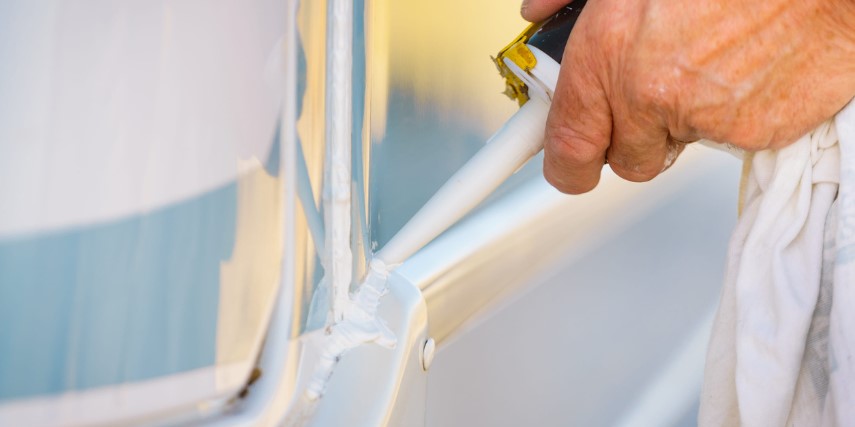
Roof seams are the initial focus of most maintenance experts. They’ll begin their inspection there because it’s often the prime spot for damage. If your roof includes skylights, vents, AC units, antennas, plumbing vents or solar mounts, these are all areas where sealant has aged and cracked. At this point, it’s not only about your fiberglass, but the caulking and sealants used to keep moisture out.
Windows are the next target. In older RVs where old sealant has been applied, maintenance best practices call for removal and replacement with more modern, hardier sealant.
Next up are the doors of your RV. From your entry door to your baggage door to compartment doors, all are prone to leaks, so be sure to look for cracks around all these areas.
Stay Road-Ready
At Gray Diesel & Equipment Services, we know the importance of RV maintenance and where to find those small issues so you’re not paying big dollars for major fixes later. From structural damage to roof concerns, full inspections to routine services, we’ll keep your RV road ready. Contact us and let’s schedule an appointment today.