

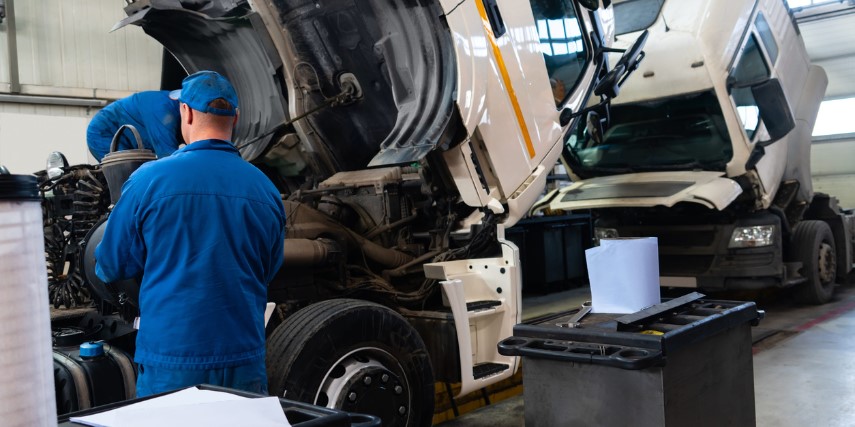
Diesel trucks are widely recognized for their durability and ability to accumulate high mileage. However, their resilience does not diminish the importance of adhering to a consistent maintenance schedule.
Whether operating on long-haul routes, towing heavy loads over short distances, or navigating frequent stop-and-go delivery conditions, diesel trucks are subjected to significant wear and tear. As a result, regular inspections are essential. Proactively maintaining your service schedule helps identify and address minor issues before they escalate into major repairs, minimizing downtime and keeping your vehicle operating efficiently.
Critical Systems
Among the most important items checked during inspection are those that get the most use and are at greatest risk for failure. For example, mechanics will focus on the oil’s quality, as it breaks down with heavy use and needs to be replaced. Filters are tasked with catching more grit and grime than gas engines, so these, too, require extra attention.
Brakes take a beating on trucks hauling heavy loads and are a critical piece of equipment that requires close monitoring, including brake fluid checks. Fuel system inspections are also important because something as seemingly insignificant as a dirty fuel filter can drastically reduce engine performance.
A key consideration is how frequently you should schedule a checkup with a qualified diesel truck technician. One of the most common indicators used to determine service intervals is vehicle mileage.
When Mileage Matters
Diesel truck manufacturers offer recommended service schedules that often follow mileage milestones. But mileage only accounts for part of the picture, because the way the truck is used and the environment in which it is used also matter.
If you’re idling for long periods, have frequent starts and stops, operate on dusty roads or in hot environments, you’re going to want to get your truck inspected before reaching the manufacturer’s recommended mileage interval.
In general, oil and filter changes are recommended every 5,000 to 7,500 miles. Some manufacturers will push that out to 10,000 miles. Getting the tires and brakes inspected is recommended at 5,000 miles. But again, conditions matter, so if you’re navigating steep terrain, the brakes are getting more use and should be checked more frequently.
Consistent Inspections Save Money
For most diesel truck owners, if you’re not on the road, you’re not making money. Preventive services can ensure better performance, reduce downtime and extend the life of your engine, but can also mean spending less money at the fueling station.
If you’ve ever run into a situation where you needed roadside assistance, you’ve experienced the regret that comes with not being more vigilant about maintenance. The trucks that last the longest and are more reliable are those that get inspected before the first signs of a problem exist.
At Gray Diesel & Equipment Services, we’re the go-to experts for diesel truck inspection and maintenance. Our best-in-class technicians have state-of-the-art diagnostic equipment that they use to provide the information they need to make repairs. If you’re a truck owner who needs trusted services and a partner focused on long-term performance, contact us.